
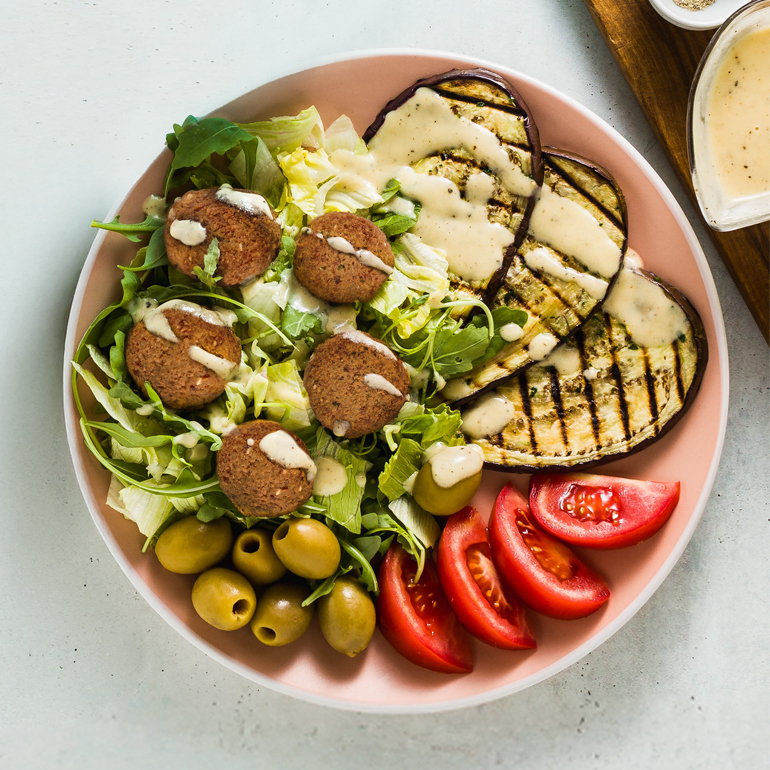
Yes, traditional falafel is vegan. It is made from ground chickpeas (garbanzo beans) or fava beans, fresh herbs like parsley and cilantro, garlic, onion, and warm spices such as cumin and coriander. There is no meat, no dairy, and no eggs in an authentic recipe. Falafel has been a plant-based staple of Middle Eastern cuisine for centuries.
The word to watch in that sentence is “traditional.” A small number of recipes and restaurant preparations add ingredients that are not plant-based, and often the problem is the sauce rather than the falafel. This guide covers the short answer, what actually goes into falafel, the exceptions worth knowing about, and how to check when you are ordering out, including what is vegan at Starbucks and CAVA.
Is Falafel Vegan? The Short Answer
Yes. Traditional falafel is 100% plant-based and naturally vegan. The core recipe is chickpeas or fava beans, fresh herbs, aromatics, and spices, held together by the starch in the legumes themselves. No eggs required.
It is also vegetarian, dairy-free, and cholesterol-free by default. Are falafels vegan across the board? Almost always. The exceptions are uncommon, and they are easy to spot once you know what to look for.
What Is Falafel Made Of?
Authentic falafel keeps a short, recognizable ingredient list.
- Chickpeas (garbanzo beans) or fava beans. The plant-based protein foundation. Egyptian falafel, called ta’ameya, traditionally uses fava beans. Levantine falafel uses chickpeas, and some recipes blend both. Either way, it is a legume and completely plant-based.
- Fresh herbs. Parsley is traditional, often paired with cilantro. They give falafel its green flecks and its bright, garden-fresh flavor.
- Garlic and onion. The aromatic backbone and the source of that unmistakable falafel-shop smell.
- Warm spices. Cumin leads, often with coriander, and sometimes cardamom or a pinch of cayenne.
- Natural leavening. A little baking powder or baking soda keeps the inside light rather than dense.
- Salt, plus a little chickpea flour if the mixture needs help binding.
That is the whole list. So what is falafel made of that could be animal-derived? In the traditional recipe, nothing. When soaked dried chickpeas are ground, the starch they release holds the mixture together on its own, with no help from an egg. Falafel was never made with animal products, so nobody had to take anything out to make it vegan.
When Falafel Might Not Be Vegan
Traditional falafel is vegan. Not every falafel you encounter is traditional. There are four things to watch for.
1. Egg as a binder.
Some shortcut recipes, especially those built on canned chickpeas rather than soaked dried ones, add egg to hold the mixture together. Canned chickpeas are already cooked, so they release less binding starch, and cooks compensate. This is the most common non-vegan ingredient in falafel, and usually signals a recipe is cutting corners rather than following the traditional method.
2. Dairy in the mix.
Uncommon, but it happens. A few recipes add yogurt or milk for tenderness, and a small number of commercial products use dairy-derived ingredients. The label will tell you.
3. Shared frying oil.
Falafel is traditionally deep-fried in vegetable oil, which is plant-based. At a restaurant, falafel may share a fryer that also fries meat or fish. That is a question of personal comfort rather than ingredients. Strict vegans usually ask. Many people do not mind.
4. The sauce.
This is the one that catches people out most often. The falafel itself is vegan, and then it arrives topped with tzatziki (yogurt), garlic aioli (egg), or crumbled feta (dairy). Many vegan falafel plates are undone by the sauce, rather than by the falafel.
How to read a label: Look for egg, milk, whey, casein, or yogurt in the ingredients. A clean falafel product lists chickpeas, vegetables, herbs, spices, and not much else. Haflé frozen falafel contains garbanzo beans, fresh vegetables, herbs, and spices, with no eggs, no dairy, and no animal products of any kind.
Is Restaurant Falafel Vegan?
Usually yes, though the plate around it may not be. Here is how some well-known chains stack up.
Is the Starbucks Spicy Falafel Pocket vegan?
Yes, as of July 27, 2026. Starbucks lists the Spicy Falafel Pocket as vegan. It is a toasted lavash flatbread filled with chickpea falafel, vegetable hummus, roasted red bell peppers, pickled onions, and a spicy herb chimichurri sauce. Dairy and egg products are not listed in the ingredients.
One important caveat: it is not gluten-free. The lavash flatbread contains wheat, and the hummus contains sesame. So it works for a vegan diet but not for a gluten-free one, and that distinction is worth making, because those two questions constantly get asked together. Availability also varies by market, so check the Starbucks app before you make the trip.
Is CAVA falafel vegan?
Yes, as of July 27, 2026. CAVA’s falafel is made from ground chickpeas with fresh parsley, herbs, and spices, and CAVA’s own allergen and nutrition guide lists it as vegan. No dairy, no egg, no meat. It is also the most protein-dense plant-based option on their menu.
Two things to know before you order.
- CAVA’s falafel is not gluten-free. It contains wheat, so it is not a safe choice for celiac disease or serious gluten sensitivity, even though it is vegan.
- It is easy to accidentally un-vegan a CAVA bowl at the toppings station. Tzatziki, Crazy Feta, crumbled feta, and the Yogurt Dill dressing all contain dairy. Build with hummus, harissa, or roasted eggplant, and choose a vegan dressing. Tahini, skhug, garlic dressing, and Greek vinaigrette all qualify.
CAVA also states that it cannot guarantee ingredients are entirely free of allergens or animal products, due to shared preparation areas and reliance on supplier information. If cross-contact matters, inform the staff before you place your order.
What to ask at a Mediterranean restaurant
Three questions cover almost everything:
- “Is there egg in the falafel?” The answer is usually no. If it is yes, you have learned something useful about how that kitchen works.
- “What is in the sauce?” Tahini and hummus are vegan. Tzatziki, labneh, and garlic aioli usually are not.
- “Is the fryer shared with meat?” Only worth asking if shared oil is a dealbreaker for you.
Menus and recipes change. Treat the specifics above as a starting point, and confirm against the restaurant’s current allergen guide when necessary.
Is Falafel Gluten-Free and Vegan?
Falafel is reliably vegan. Gluten-free is the more complicated answer, and the two questions get conflated constantly.
Vegan: yes, almost always, for all the reasons above.
Gluten-free: it depends on how it is made. Authentic falafel is made with chickpeas and chickpea (garbanzo bean) flour, both of which are naturally gluten-free. Many recipes and commercial products contain wheat flour or breadcrumbs as a binder. That is why both CAVA’s falafel and the Starbucks pocket contain wheat despite being fully vegan.
If you need both, read the label instead of assuming. Look for chickpea flour rather than wheat flour, and for a gluten-free certification if you have celiac disease or a serious gluten sensitivity. Haflé frozen falafel is both vegan and Gluten-Free Certified, made with garbanzo beans and no wheat binders.
Vegan Sauces and Sides for Falafel
The falafel is the easy part. The rest of the plate needs a closer look.
Naturally vegan:
- Tahini sauce. Pure sesame seed paste thinned with lemon, garlic, and water. A traditional falafel pairing that is completely plant-based. Haflé Tahini is 100% sesame seeds, nothing else.
- Hummus. Chickpeas, tahini, lemon, and garlic.
- Baba ganoush. Roasted eggplant and tahini.
- Harissa, skhug, and zhoug. Chili-based, no dairy.
- Fresh salads and pickles. Tabbouleh, fattoush, Israeli salad, pickled turnips, pickled onions.
- Pita and rice. Standard pita is vegan, though it is worth scanning packaged versions for milk or honey.
Not vegan:
- Tzatziki, or any yogurt sauce. Dairy.
- Labneh. Strained yogurt. Dairy.
- Feta. Dairy.
- Garlic aioli. Usually contains egg. One thing worth knowing: toum, the Lebanese whipped garlic sauce, looks nearly identical but is made from garlic, oil, lemon, and salt, and it is vegan. If a Mediterranean restaurant serves a fluffy white garlic sauce, it is more likely to be toum than aioli. Ask before you skip it.
Build a falafel plate on tahini, hummus, and fresh vegetables. It is vegan with no substitutions. Our falafel bowl recipes are built on exactly that principle.
Is Vegan Falafel Healthy?
Falafel is nutritionally solid. Built on chickpeas, it is naturally high in plant-based protein and dietary fiber, both of which support satiety and digestion. It is cholesterol-free, low in saturated fat, and a good source of folate, iron, and B vitamins.
Preparation makes the biggest difference. Deep-fried falafel absorbs oil. Air-fried or baked falafel gives you the same crisp exterior with far less of it. If you eat falafel regularly, that choice matters more than anything else on the plate. Our guide on how to cook falafel covers all four methods.
Falafel also fits naturally into the Mediterranean way of eating: legumes, vegetables, olive oil, and herbs. Nutrition varies by product and by preparation, so check the label on what you buy.
The Easiest Way to Enjoy Vegan Falafel at Home
If you want vegan falafel without the guesswork, prepare it yourself or purchase it from a vendor that makes it the traditional way.
Haflé Foods falafel has always been vegan. We make it with garbanzo beans, fresh vegetables, herbs, and traditional Middle Eastern spices, and it contains no eggs, dairy, animal products, or artificial preservatives. It is also Gluten-Free Certified, all-natural, and a great source of plant-based protein.
- Haflé frozen falafel is fully cooked. Air fry, bake, or pan-fry it straight from frozen, and it is ready in about 10 minutes.
- Haflé falafel mix is for cooking from scratch. It is a seasoned chickpea-flour blend that needs nothing but water.
- Haflé tahini is 100% sesame seed paste, the naturally vegan sauce that completes the plate.
Haflé Foods is a brand of Zetlian Bakery, a family-owned, multi-generational food manufacturer that has been making food in Sun Valley, California, since 1972.
Find Haflé near you, or browse more answers on our FAQ page.
Is Falafel Vegan? FAQ
Is falafel vegan or vegetarian?
Both. Traditional falafel is made entirely from plants: chickpeas or fava beans, herbs, garlic, onion, and spices. It suits both vegan and vegetarian diets.
Does falafel have egg in it?
Traditional falafel does not. The starch released from ground, soaked chickpeas binds the mixture on its own. Some shortcut recipes that use canned chickpeas add egg as a binder, so it is worth checking the label or asking at a restaurant.
Is falafel dairy-free?
Yes. Traditional falafel contains no milk, butter, yogurt, or cheese. Dairy usually turns up in what is served alongside it. Tzatziki, labneh, and feta all contain dairy. Tahini and hummus do not.
Is fried falafel vegan?
Yes, as long as it is fried in vegetable oil, which is standard. The only consideration is whether the restaurant uses the same fryer for meat or fish. If shared oil is a concern to you, ask before placing your order.
Is store-bought falafel vegan?
Usually. Most frozen and refrigerated falafel is plant-based, but a small number contain egg or dairy. Check the ingredient list for egg, milk, whey, or casein. Haflé frozen falafel is 100% vegan, made with garbanzo beans, fresh vegetables, herbs, and spices.
Is falafel gluten-free and vegan?
Falafel is reliably vegan. Gluten-free depends on the binder. Authentic falafel is made with chickpea flour and is naturally gluten-free, but some recipes and restaurant versions use wheat flour. If you need both, look for a gluten-free certification on the package.
Is falafel keto or paleo?
Neither. Chickpeas are legumes, which are excluded from paleo, and they are relatively high in carbohydrates, making falafel difficult to fit into a ketogenic diet. It is an excellent fit for vegan, vegetarian, and Mediterranean diets.